
For weeks, I have been watching spring bulbs in our garden growing green shoots. Each day, there would be more, but no flowers. Then, a week ago, the first flower appeared and more kept popping up and opening as if by magic.

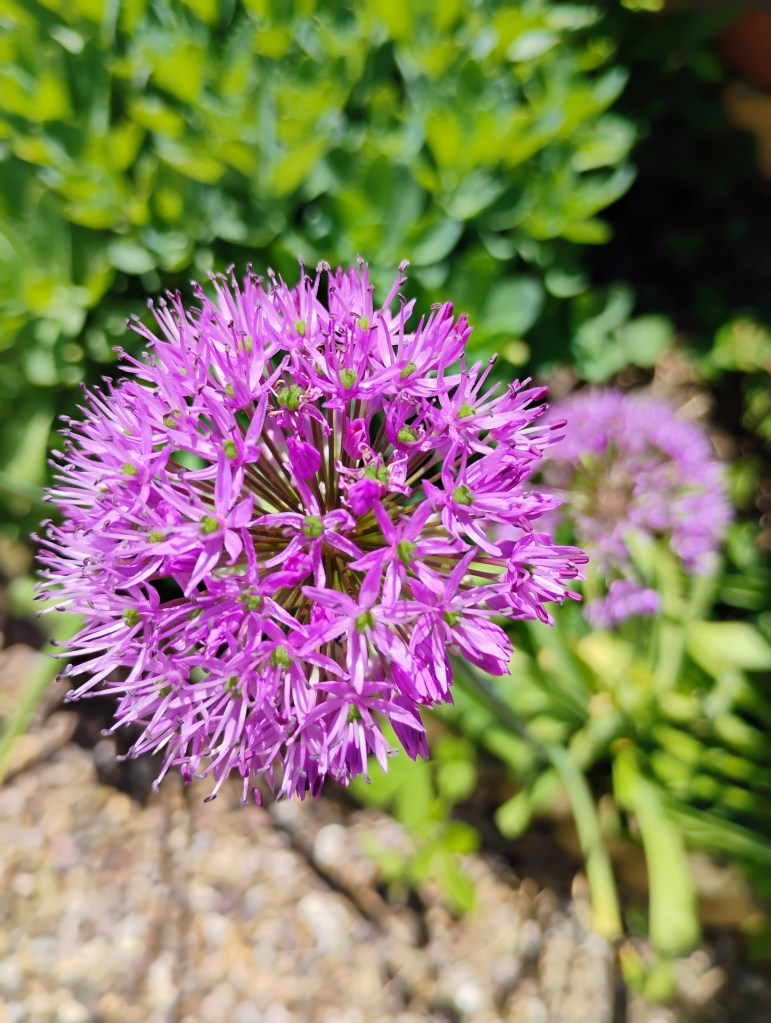
[An allium in bud and a flowering allium]
Just yesterday, I attended a Zoom networking event. One of the topics discussed was how to find clients – relevant to any freelancer of course. You might have qualifications and be ready to work, but where is anyone who needs you? What on earth have these 2 scenes got in common?!
Well, after applying to translation agencies whilst studying on my MA, several polite replies came, some happy to ‘keep my name on file’, but no actual work offers arrived. I did some temping and evening classes in subjects related to my interests and potential work. One day, just over a year later, an agency that had ‘kept my name on file’ contacted me with a genuine project. After successfully completing it, I realised I was now a practising translator, not just a qualified one. This agency gave me more work. I could write about the work I was doing on my CV. Other agencies offered me work, then colleagues did so and referrals from colleagues even opened up opportunities to work with direct clients. These then recommended me to other direct clients. Somehow, the seed I had planted was starting to flower. Was I simply lucky? This is partly true. I am also extremely grateful for the advice I have received.
How to blossom as a translator:
1) Be (politely) persistent!
2) Join a professional organisation whilst studying. You can learn new skills in workshops and meet colleagues. Both the Chartered Institute of Linguists https://www.ciol.org.uk/ and the Institute of Translation and Interpreting https://www.iti.org.uk/, with its many subject, language, regional and support networks, offer solidarity and an opportunity to advertise your skills.
3) Learn from experienced translators at workshops and in forums – everything from subject and language skills to setting up your office and online presence.
4) Be flexible – not all work is translation or interpreting. Proofreading and editing are often required.
5) Be sociable – networking is not just about work, but should be fun. There are regular meet-ups with colleagues from pubs to walks and art exhibitions.
6) Write about what you do workwise and in your spare time – on your website, in professional journals and anywhere relevant to your specialisms. One of my hobbies has become a specialist subject in my translation work.
7) Be optimistic!
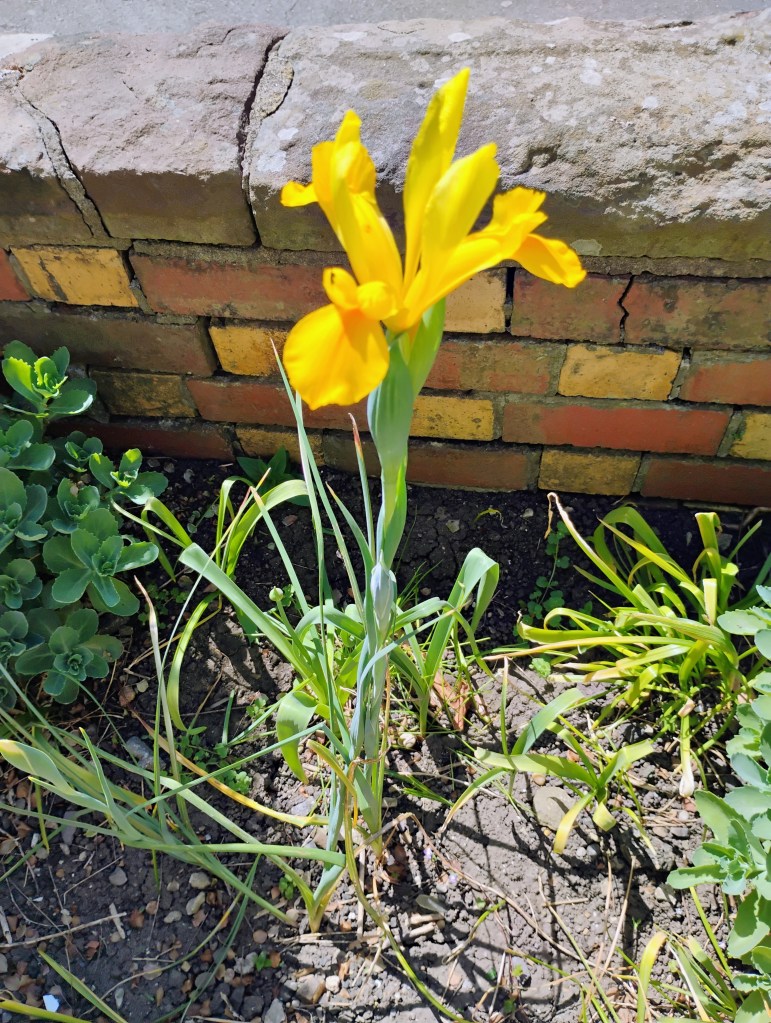
[A yellow iris]
Good luck!
 Greenlit Translations - German and Italian into English Translator, Editor and Proofreader