Word Weaver or Sentence Spinner?

This October, I moderated a German-into-English translation slam. Here, Bronwen Davies and Katy Fowler compared their translations of a written interview with a contemporary classical composer before an audience of fellow translators – an exercise where language experts can really demonstrate their skills. In the right hands, there might be many changes, but the meaning and spirit of the original remain and are now more widely understood.

However, the once highly esteemed job of providing an audience with a written rendition of their words turned, as if by magic, into another language is increasingly being taken over by machines. Translation apps, machine translation and AI-generated texts have been appearing everywhere for some time. Translation agencies are offering more projects where Translators post-edit machine or AI-generated translation, changing traditional translation work considerably.

So, who are we and what are we doing?

Image courtesy of Simone Secci on unsplash.com

My regional network of the Institute of Translation and Interpreting recently held its annual Members’ Day. This included a presentation by Christophe Fricker of the University of Bristol. Entitled Once a translator, still a translator?, Christophe questioned our continued use of the term Translator leading to a discussion of who we are and what we do now.

So, what are we doing? We may still be translating, but we are more often proofreading, editing, copywriting, creating content, revising… One document is still becoming another document. Is it simply different or enhanced? Is it typed, written, audible, interactive…? Post-editing machine/AI-generated documents reminds me of the dramatic changes that took place as part of the industrial revolution. Artisanal crafts were transformed into mechanised roles. In parallel, post-editing projects may seem like puzzle-solving exercises, swapping raw streams of words into coherent ideas.

Image courtesy of the Art Institute of Chicago on unsplash.com

As I still translate, I feel I am a Translator, but my website describes me as a Translator, Editor and Proofreader because I undertake all these tasks. Yet, they are all related. In fact, I have always proofread and edited my own translations. As linguists, do we need to fit into a box? Maybe, we teach alongside translation. Maybe, we offer marketing advice as a language consultant. Do we want a snappy job title or an explanation of our role? If your role has changed drastically, are you now more of a Consultant, a Linguist, a Word Artist? Are you a Word Weaver or a Sentence Spinner? Do you “work in communications”?

One thing is certain though: Without the human touch, those raw materials will not be a finished product.

From Planting to Flourishing

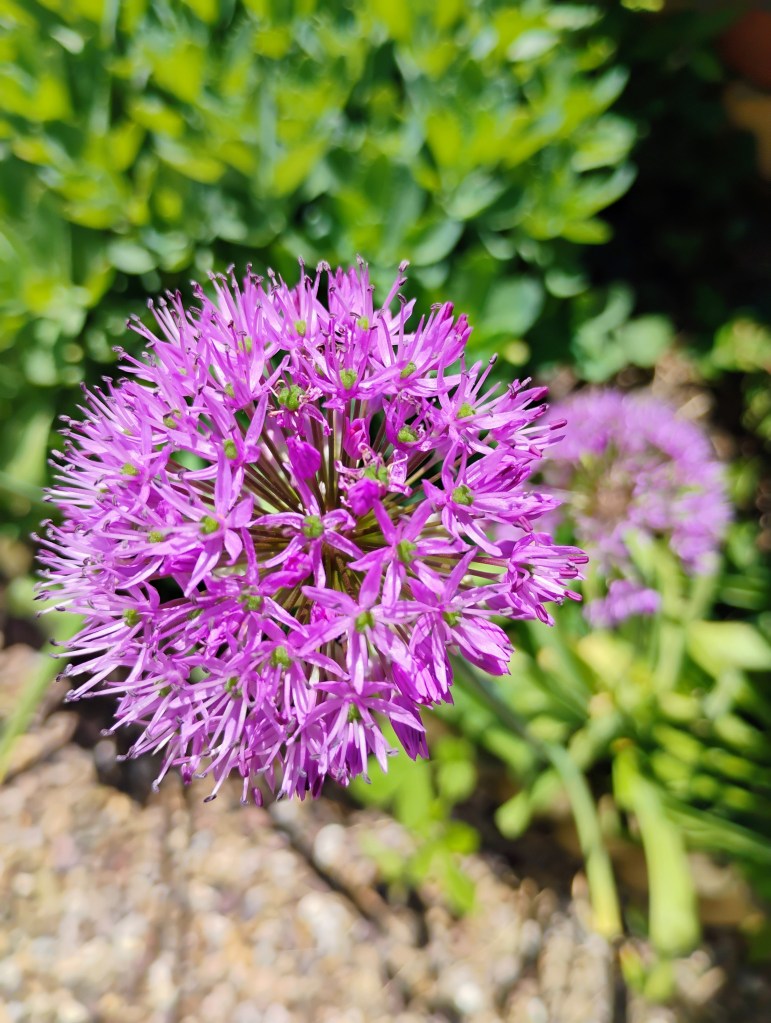
For weeks, I have been watching spring bulbs in our garden growing green shoots. Each day, there would be more, but no flowers. Then, a week ago, the first flower appeared and more kept popping up and opening as if by magic.

[An allium in bud and a flowering allium]

Just yesterday, I attended a Zoom networking event. One of the topics discussed was how to find clients – relevant to any freelancer of course. You might have qualifications and be ready to work, but where is anyone who needs you? What on earth have these 2 scenes got in common?!

Well, after applying to translation agencies whilst studying on my MA, several polite replies came, some happy to ‘keep my name on file’, but no actual work offers arrived. I did some temping and evening classes in subjects related to my interests and potential work. One day, just over a year later, an agency that had ‘kept my name on file’ contacted me with a genuine project. After successfully completing it, I realised I was now a practising translator, not just a qualified one. This agency gave me more work. I could write about the work I was doing on my CV. Other agencies offered me work, then colleagues did so and referrals from colleagues even opened up opportunities to work with direct clients. These then recommended me to other direct clients. Somehow, the seed I had planted was starting to flower. Was I simply lucky? This is partly true. I am also extremely grateful for the advice I have received.

How to blossom as a translator:

1) Be (politely) persistent!

2) Join a professional organisation whilst studying. You can learn new skills in workshops and meet colleagues. Both the Chartered Institute of Linguists https://www.ciol.org.uk/ and the Institute of Translation and Interpreting https://www.iti.org.uk/, with its many subject, language, regional and support networks, offer solidarity and an opportunity to advertise your skills.

3) Learn from experienced translators at workshops and in forums – everything from subject and language skills to setting up your office and online presence.

4) Be flexible – not all work is translation or interpreting. Proofreading and editing are often required.

5) Be sociable – networking is not just about work, but should be fun. There are regular meet-ups with colleagues from pubs to walks and art exhibitions.

6) Write about what you do workwise and in your spare time – on your website, in professional journals and anywhere relevant to your specialisms. One of my hobbies has become a specialist subject in my translation work.

7) Be optimistic!

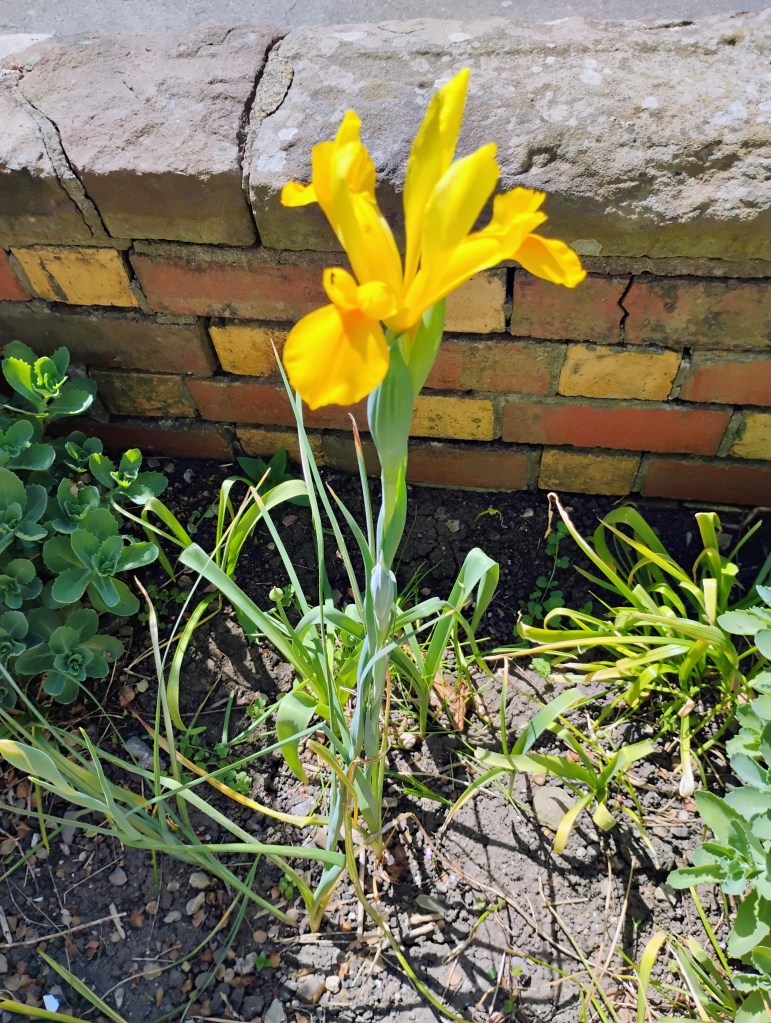
[A yellow iris]

Good luck!