Fifty translators and interpreters from 5 ITI networks congregated in Birmingham for a wealth of interactive sessions on Saturday 25th April 2026. Organised by Lloyd Bingham of ITI Cymru Wales, networks from the South West, West Midlands, North West and the Western Regional Group also came along to The Warehouse in Digbeth for the Westwords (Un)conference. The day featured 1 conference and 2 unconference streams covering yoga, subtitling, football-related outreach, comedy drama, technology and a fun quiz.
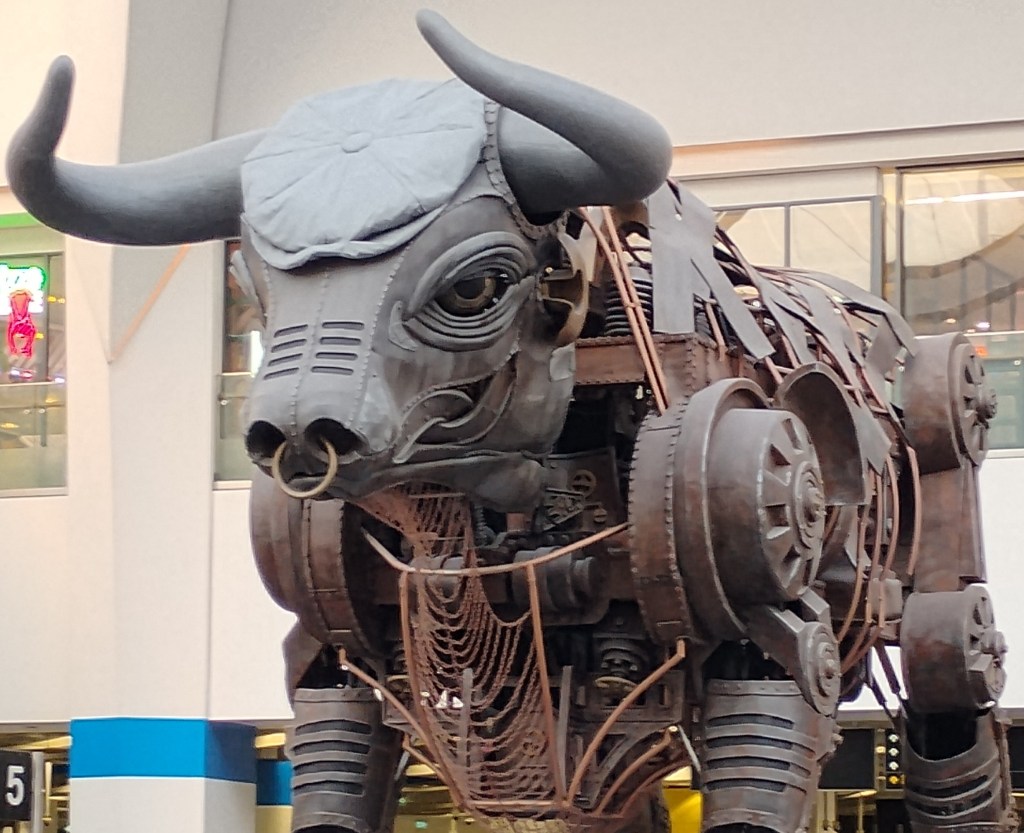
[Ozzy the Bull, Birmingham New Street Station]
So, what is an unconference?
Each delegate proposes a topic. The most popular then feature with a brief introduction followed by lively discussion. The conference sessions are more formal: sometimes with slides, sometimes simply led by the presenter with Q&A. Both hard and soft skills related to translating, business or technology were popular at Westwords.
My day started with Health & wellness at work, a conference session by Courtney Greenlaw. This was no formal PowerPoint presentation. Yes, there were slides showing us research about our sedentary, eye-straining profession, but also guiding us into yoga poses and meditation. After a somewhat difficult journey to the venue, this was the interactive tonic needed to start the day positively, both physically and mentally.
After a quick coffee, I ventured to the small ‘room’, Digbeth Community Garden, where Luke James held the unconference session Adaptation across nations: differences in English across the Anglosphere. As I translate, proofread and edit both British and American English, I am aware of some stark differences there. Here, I was also introduced to some radically different words and phrases in Australian and Canadian Englishes plus relevant forums for further information.
Back to the conference where Nicole van den Wittenboer spoke about The tech gap in the translation profession. Specifically, this was about whether we understand AI, its use and value alongside our own role. There ensued intense discussion about AI’s purpose, our workflows, what clients need… I was able to comment at the fifth attempt, as there were few pauses.
A lunch-time stroll
With 4 options for lunch. I headed off with the pub group, our route veering off-course due to building sites. Still, we made it via a lovely canal walk:
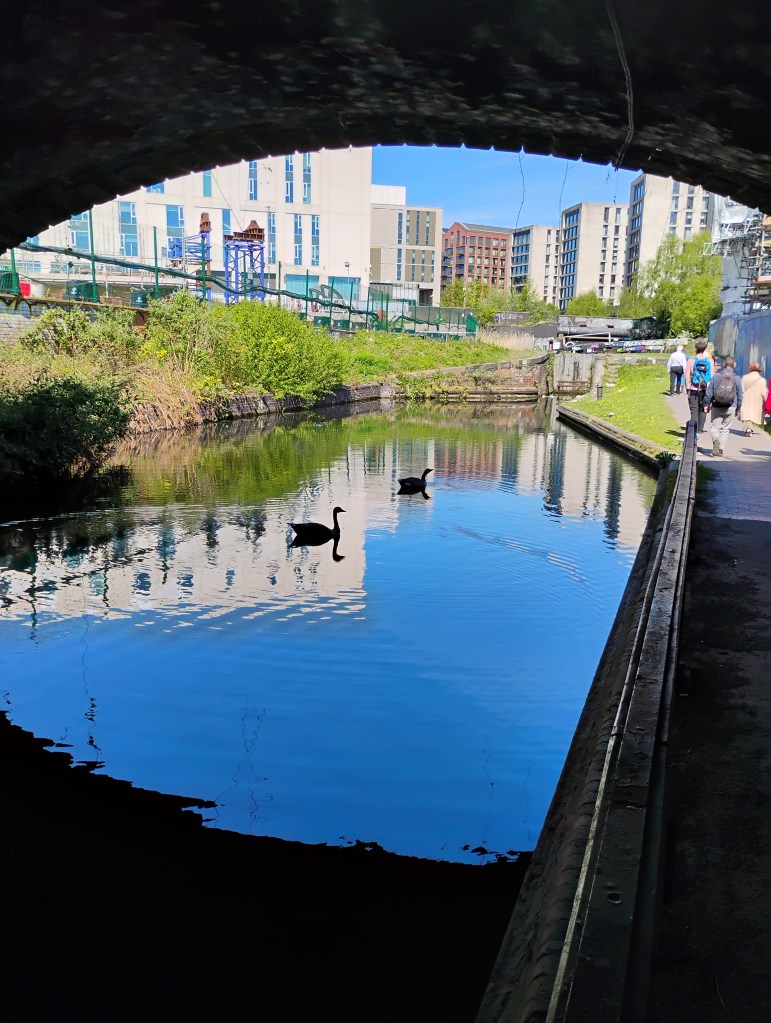
[Wandering along the canal]
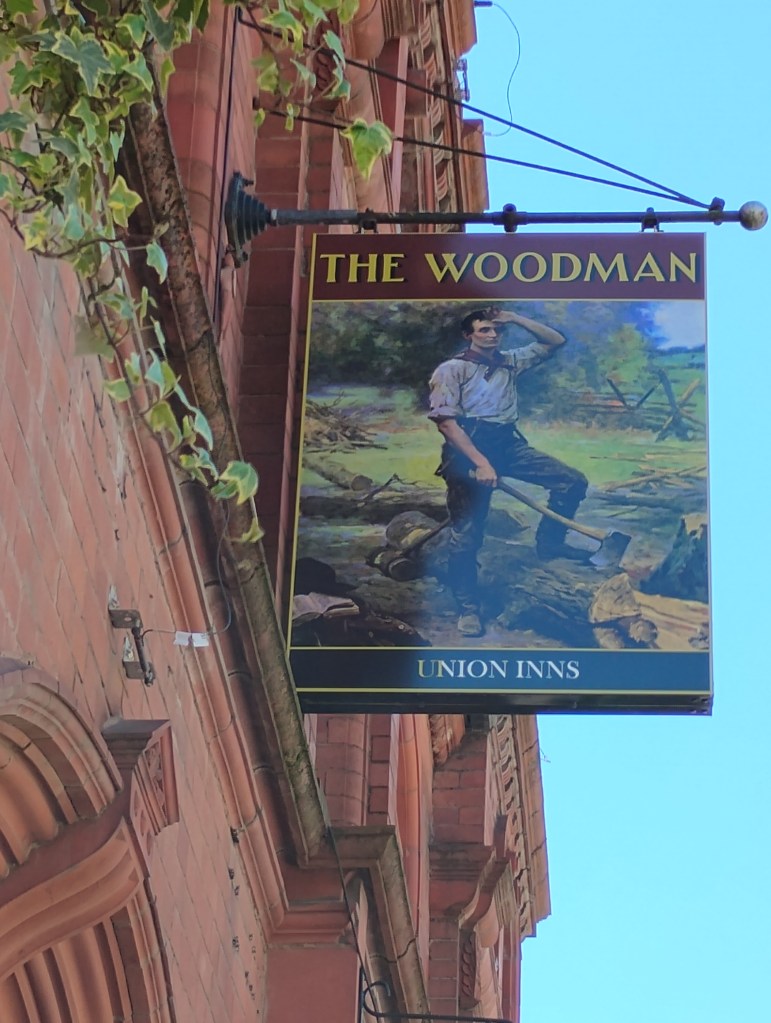
[Our destination]
A sunny, mindful and practical afternoon
My afternoon began with an unconference session in the delightful garden: Jenny Taylor proposed Fostering an abundance mindset in a world of scarcity. I facilitated this session, which flowed gently from discussions of what we can celebrate workwise, personally and what is in our ‘locus of control’. In challenging times, it is easy to focus on the negative, but we should embrace the positive. Jenny mentioned ‘GLAD’, where we can show Gratitude, think about what we’ve Learned, find an Accomplishment and take Delight in something each day. The garden’s musical birdsong only enhanced this uplifting atmosphere.
Then, I returned indoors to facilitate the unconference session of Finding & marketing to direct clients, proposed by Katie Ward and Robert Calkin. Whilst working with agencies has long been the mainstay of freelancing, downwards pressure on prices alongside the post-editing of machine and AI-generated translation means that more fulfilling work (and remuneration) is possible with direct clients. Specialising, networking with colleagues and engaging with other professionals by commenting on your ideal client’s posts, attending trade fairs, blogging and using social media to demonstrate what you do and your interests were among the many useful ideas here.
[The Western Regional Group banner]
The wrap-up
In the wrap-up, we discovered that, besides regional networks, subject and language networks had also been represented. Some of us discussed the day’s highlights with refreshments at the nearby Custard Factory, a venue uniting Birmingham’s industrial past with its creative present – a fitting end to Westwords.