Word Weaver or Sentence Spinner?

This October, I moderated a German-into-English translation slam. Here, Bronwen Davies and Katy Fowler compared their translations of a written interview with a contemporary classical composer before an audience of fellow translators – an exercise where language experts can really demonstrate their skills. In the right hands, there might be many changes, but the meaning and spirit of the original remain and are now more widely understood.

However, the once highly esteemed job of providing an audience with a written rendition of their words turned, as if by magic, into another language is increasingly being taken over by machines. Translation apps, machine translation and AI-generated texts have been appearing everywhere for some time. Translation agencies are offering more projects where Translators post-edit machine or AI-generated translation, changing traditional translation work considerably.

So, who are we and what are we doing?

Image courtesy of Simone Secci on unsplash.com

My regional network of the Institute of Translation and Interpreting recently held its annual Members’ Day. This included a presentation by Christophe Fricker of the University of Bristol. Entitled Once a translator, still a translator?, Christophe questioned our continued use of the term Translator leading to a discussion of who we are and what we do now.

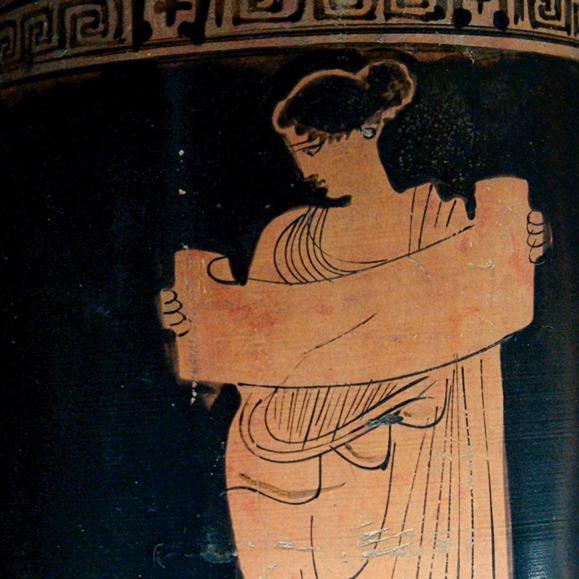
So, what are we doing? We may still be translating, but we are more often proofreading, editing, copywriting, creating content, revising… One document is still becoming another document. Is it simply different or enhanced? Is it typed, written, audible, interactive…? Post-editing machine/AI-generated documents reminds me of the dramatic changes that took place as part of the industrial revolution. Artisanal crafts were transformed into mechanised roles. In parallel, post-editing projects may seem like puzzle-solving exercises, swapping raw streams of words into coherent ideas.

Image courtesy of the Art Institute of Chicago on unsplash.com

As I still translate, I feel I am a Translator, but my website describes me as a Translator, Editor and Proofreader because I undertake all these tasks. Yet, they are all related. In fact, I have always proofread and edited my own translations. As linguists, do we need to fit into a box? Maybe, we teach alongside translation. Maybe, we offer marketing advice as a language consultant. Do we want a snappy job title or an explanation of our role? If your role has changed drastically, are you now more of a Consultant, a Linguist, a Word Artist? Are you a Word Weaver or a Sentence Spinner? Do you “work in communications”?

One thing is certain though: Without the human touch, those raw materials will not be a finished product.
AI Chatter – Do Shortcuts Matter?

A job advert recently popped into my inbox. It was in English, but the job itself was based in Germany. A line in the email simply recommended using “intelligent programs” to understand the job description on the company’s website.

How odd, I thought. If you want to work abroad, it certainly helps if you can read and write the relevant language – from shopping to getting a doctor’s appointment through to enjoying hobbies and making friends. Having worked in Germany, this seems obvious to me. So, why would you expect someone to use a tool to understand their future working environment?

Save time and get the gist

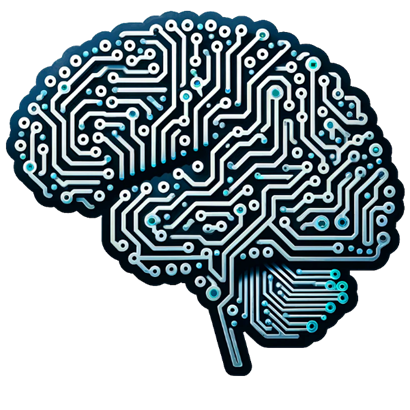
What is an intelligent program? The OED defines AI (artificial intelligence) as “The capacity of computers or other machines to exhibit or simulate intelligent behaviour […].” A popular AI tool, ChatGPT, is just one example. It is a large language model (LLM) that can save you time and help you get the gist of what you’re reading. LLMs are trained on large amounts of data to enable them to “understand” and generate a natural language style. Chat GPT could write a Victorian novel for you or give you advice on just about anything, apparently.

But is the gist enough?

AI models are often very complementary about their own achievements. According to a 2023 Forbes headline, “AI Could Help Find Life On Mars With 90% Accuracy, Scientists Say”[1]. When it comes to translation, 90% accuracy sounds great until you realise that means 1 in 10 words is wrong.

For example, one tool translated ‘untermauern’ (German for ‘to reinforce’ or ‘substantiate’) as ‘undermine’ – the complete opposite of what it really means. The tool understood ‘unter’ correctly as ‘under’ and then failed to work out the rest. What happens when there are not just 10 words, but 10 pages or even 100 pages?

As AI can only reproduce text based on previous documents, it cannot create something new. This is why it stumbled when faced with an unfamiliar word. There is also a copyright infringement risk if you use it to translate confidential documents. Added to this is the high processing power of these tools – an adverse environmental impact. Excessive demand from users can also cause outages that completely stop a system from working.


[1] https://www.forbes.com/sites/jamiecartereurope/2023/09/25/new-ai-could-help-find-life-on-mars-with-90-accuracy-say-scientists/?sh=6cf72f8b4c40

Bridging the gap?

AI tools appear to read, but what are they really doing? They are analysing text based on existing data using algorithms. They piece this data together into phrases as a translator would. But they can only do so based on old information. They do not actually understand what they are reading or writing.

What makes my job exciting is that language is dynamic and beyond the scope of machines. I make new discoveries all the time. As the world changes, new words emerge. Some become more popular, while others disappear. Some change their meaning too – don’t get caught out!

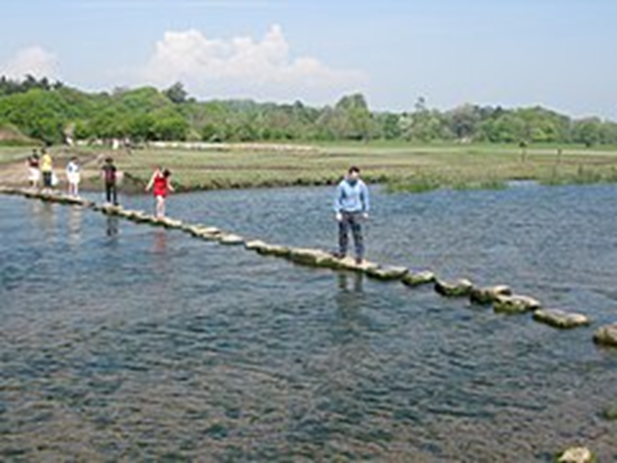
You wouldn’t look at an old map to find a safe route across a river. So, why trust a tool that is searching for old information to tell you something new? AI can only take you so far. Without translators and interpreters, you would be lost!

[Images courtesy of Wikimedia Commons]

With thanks to my colleagues in the German Network of the Institute of Translation and Interpreting (https://itigermannetwork.org.uk/) for a recent online discussion, which inspired this article.